
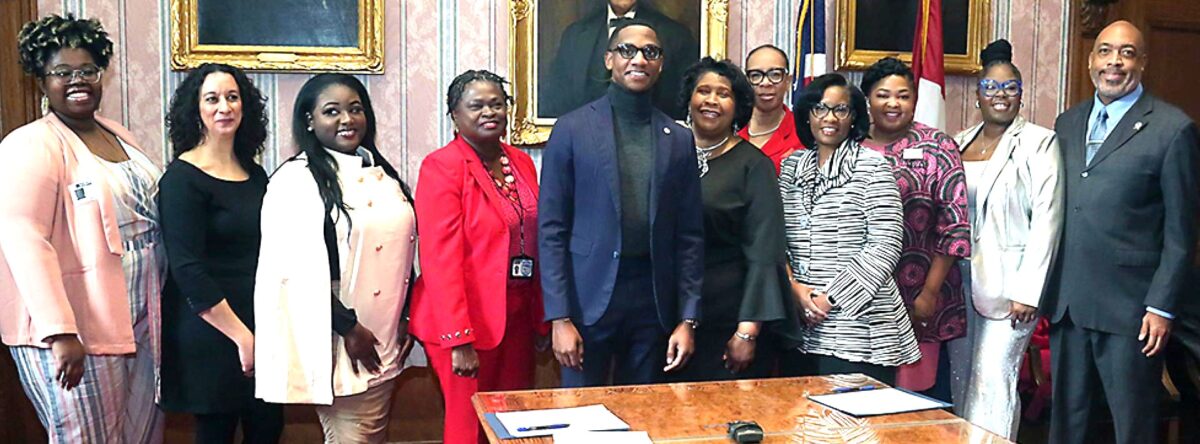
The official launch of the Cleveland Black Women and Girls Commission took place early this month as a response to a 2020 Bloomberg City Lab study that showed Cleveland as the worst city for Black women and girls.
After two years of planning and council approvals, Mayor Justin Bibb inaugurated ten commission members (four openings are still available) on Feb. 8. This commission seeks to address the systemic issues Black women and girls in Cleveland face by addressing various areas, including education and economic disparities. Stephanie Howse-Jones, City Council Representative for Ward 7, explained that this would give Black women the opportunity to “work in partnership with the City of Cleveland” on their own terms, for their benefit.
The commission hopes to address these issues by advocating for programs and legislation that will improve access to quality education, address achievement gaps, support entrepreneurship, and promote financial literacy; with plans to engage with Black women and girls through community outreach and programs.“I hope this fosters a thriving environment for Black women entrepreneurs and empowers them to create a stronger support network within the community,” Local business owner Kayla Dial said.
However, it is unclear what exactly these programs will be because they are only beginning. While the commission is still in its early stages, it is a step towards creating a more equitable future for Black women and girls in Cleveland. Many people will await its promises.